A photographer’s thoughts on Meta, rights, and artificial intelligence
As a photographer, you put more than just time into an image. There is planning, waiting, missed opportunities, and occasionally the quiet doubt about whether it was worth going out at all. The images become more than files — they are the result of choices and experience.
Which is why it can feel a bit strange how easily they slip out of your hands once they end up on social media.
What are you actually agreeing to?
When you upload photos to Facebook or Instagram, you grant Meta a fairly generous license to use them. It’s global, royalty-free, and transferable — which sounds more like paperwork for an offshore oil rig than for a landscape photo from the north of Norway.
Meta doesn’t necessarily own your images, but they are allowed to use them within their ecosystem. And that ecosystem is, to put it mildly, quite large.
Why this matters to photographers
For many people, images are just content.
For photographers, they are work — often unpaid work in the field, followed by more work in front of a screen.
When the terms are broad enough to require a magnifying glass, it becomes difficult to know where your images might appear, and in what context. Not because something is necessarily wrong today, but because the door is left slightly open for tomorrow.
Images and artificial intelligence
Then there’s AI.
A field that develops faster than the weather changes up here in the north.
Photographs are increasingly used for analysis and training of artificial intelligence systems. Often, it’s unclear whether your images are simply shown to other users, used to improve algorithms, or become part of something else later on.
For photographers, this isn’t about being anti-technology. It’s about knowing what you actually agreed to. When the terms are open-ended, it can be hard to see where the line is drawn — and finding out afterwards is rarely comforting.
It comes down to trust
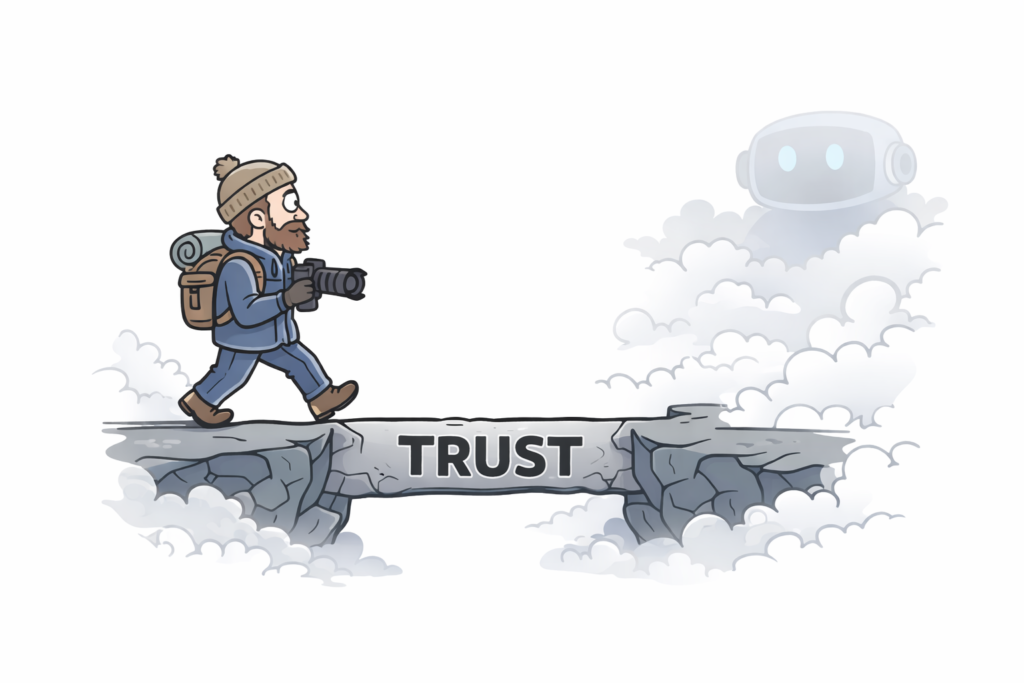
For me, this ultimately comes down to one word: trust.
As a photographer, I want to know where my images go, how they are used, and who holds the rights to them. When the answers become vague or change over time, trust tends to fade quietly — much like daylight in November.
Are there other places to share your work?
Fortunately, yes.
There are smaller, often European and decentralized alternatives for sharing images and content. Pixelfed is a photography-focused platform without ads or algorithm-driven visibility. Mastodon works as a decentralized social network where users choose their own communities and rules. For video, there are services like PeerTube, where content isn’t gathered under one single commercial roof.
They don’t offer the same reach.
But they offer something else: fewer surprises and a bit more clarity.
A simple calculation
For me, the choice eventually became simple:
a little less visibility, in exchange for a little more control.
That doesn’t mean these platforms are perfect. It just means I sleep a bit better knowing my images aren’t quietly traveling places I didn’t intend.
Closing thoughts
This isn’t a call to delete accounts in frustration. It’s simply an invitation to read the terms, ask questions, and make conscious choices — especially if you care about your images or depend on them.
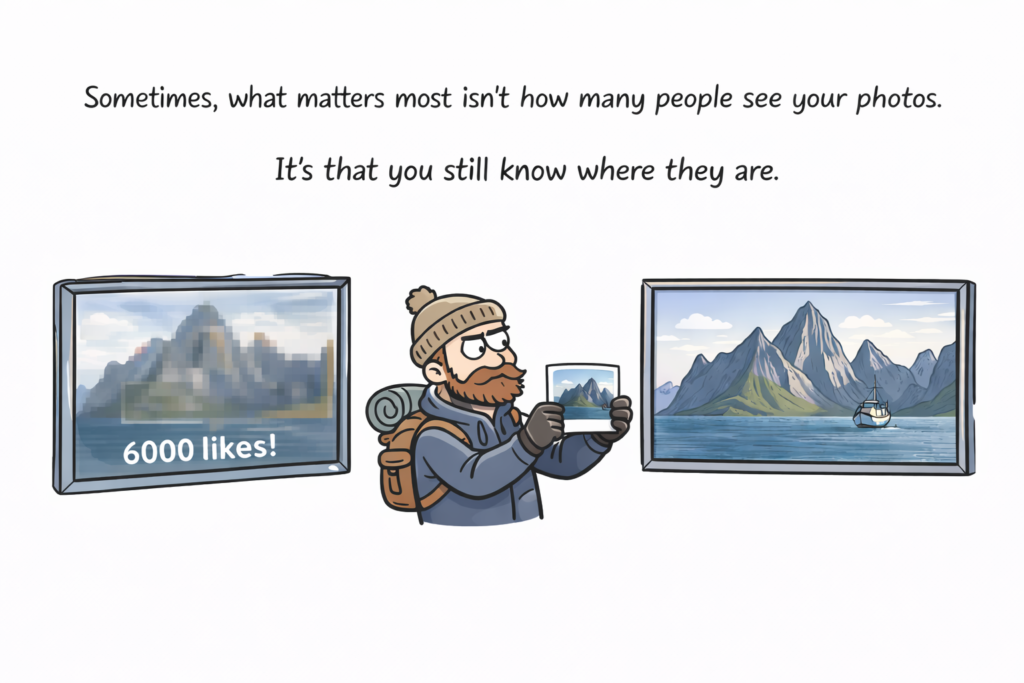
Sometimes, what matters most isn’t how many people see your photos.
It’s that you still know where they are.A photographer’s thoughts on Meta, rights, and artificial intelligence
As a photographer, you put more than just time into an image. There is planning, waiting, missed opportunities, and occasionally the quiet doubt about whether it was worth going out at all. The images become more than files — they are the result of choices and experience.
Which is why it can feel a bit strange how easily they slip out of your hands once they end up on social media.
What are you actually agreeing to?
When you upload photos to Facebook or Instagram, you grant Meta a fairly generous license to use them. It’s global, royalty-free, and transferable — which sounds more like paperwork for an offshore oil rig than for a landscape photo from the north of Norway.
Meta doesn’t necessarily own your images, but they are allowed to use them within their ecosystem. And that ecosystem is, to put it mildly, quite large.
Why this matters to photographers
For many people, images are just content.
For photographers, they are work — often unpaid work in the field, followed by more work in front of a screen.
When the terms are broad enough to require a magnifying glass, it becomes difficult to know where your images might appear, and in what context. Not because something is necessarily wrong today, but because the door is left slightly open for tomorrow.
Images and artificial intelligence
Then there’s AI.
A field that develops faster than the weather changes up here in the north.
Photographs are increasingly used for analysis and training of artificial intelligence systems. Often, it’s unclear whether your images are simply shown to other users, used to improve algorithms, or become part of something else later on.
For photographers, this isn’t about being anti-technology. It’s about knowing what you actually agreed to. When the terms are open-ended, it can be hard to see where the line is drawn — and finding out afterwards is rarely comforting.
It comes down to trust
For me, this ultimately comes down to one word: trust.
As a photographer, I want to know where my images go, how they are used, and who holds the rights to them. When the answers become vague or change over time, trust tends to fade quietly — much like daylight in November.
Are there other places to share your work?
Fortunately, yes.
There are smaller, often European and decentralized alternatives for sharing images and content. Pixelfed is a photography-focused platform without ads or algorithm-driven visibility. Mastodon works as a decentralized social network where users choose their own communities and rules. For video, there are services like PeerTube, where content isn’t gathered under one single commercial roof.
They don’t offer the same reach.
But they offer something else: fewer surprises and a bit more clarity.
A simple calculation
For me, the choice eventually became simple:
a little less visibility, in exchange for a little more control.
That doesn’t mean these platforms are perfect. It just means I sleep a bit better knowing my images aren’t quietly traveling places I didn’t intend.
Closing thoughts
This isn’t a call to delete accounts in frustration. It’s simply an invitation to read the terms, ask questions, and make conscious choices — especially if you care about your images or depend on them.
Sometimes, what matters most isn’t how many people see your photos.
It’s that you still know where they are.