When Your Photos Suddenly Have Many New Owners

A photographer’s thoughts on Meta, rights, and artificial intelligence

As a photographer, you put more than just time into an image. There is planning, waiting, missed opportunities, and occasionally the quiet doubt about whether it was worth going out at all. The images become more than files — they are the result of choices and experience.

Which is why it can feel a bit strange how easily they slip out of your hands once they end up on social media.


What are you actually agreeing to?

When you upload photos to Facebook or Instagram, you grant Meta a fairly generous license to use them. It’s global, royalty-free, and transferable — which sounds more like paperwork for an offshore oil rig than for a landscape photo from the north of Norway.

Meta doesn’t necessarily own your images, but they are allowed to use them within their ecosystem. And that ecosystem is, to put it mildly, quite large.


Why this matters to photographers

For many people, images are just content.
For photographers, they are work — often unpaid work in the field, followed by more work in front of a screen.

When the terms are broad enough to require a magnifying glass, it becomes difficult to know where your images might appear, and in what context. Not because something is necessarily wrong today, but because the door is left slightly open for tomorrow.


Images and artificial intelligence

Then there’s AI.
A field that develops faster than the weather changes up here in the north.

Photographs are increasingly used for analysis and training of artificial intelligence systems. Often, it’s unclear whether your images are simply shown to other users, used to improve algorithms, or become part of something else later on.

For photographers, this isn’t about being anti-technology. It’s about knowing what you actually agreed to. When the terms are open-ended, it can be hard to see where the line is drawn — and finding out afterwards is rarely comforting.


It comes down to trust

For me, this ultimately comes down to one word: trust.
As a photographer, I want to know where my images go, how they are used, and who holds the rights to them. When the answers become vague or change over time, trust tends to fade quietly — much like daylight in November.


Are there other places to share your work?

Fortunately, yes.

There are smaller, often European and decentralized alternatives for sharing images and content. Pixelfed is a photography-focused platform without ads or algorithm-driven visibility. Mastodon works as a decentralized social network where users choose their own communities and rules. For video, there are services like PeerTube, where content isn’t gathered under one single commercial roof.

They don’t offer the same reach.
But they offer something else: fewer surprises and a bit more clarity.


A simple calculation

For me, the choice eventually became simple:
a little less visibility, in exchange for a little more control.

That doesn’t mean these platforms are perfect. It just means I sleep a bit better knowing my images aren’t quietly traveling places I didn’t intend.


Closing thoughts

This isn’t a call to delete accounts in frustration. It’s simply an invitation to read the terms, ask questions, and make conscious choices — especially if you care about your images or depend on them.

Sometimes, what matters most isn’t how many people see your photos.
It’s that you still know where they are.A photographer’s thoughts on Meta, rights, and artificial intelligence

As a photographer, you put more than just time into an image. There is planning, waiting, missed opportunities, and occasionally the quiet doubt about whether it was worth going out at all. The images become more than files — they are the result of choices and experience.

Which is why it can feel a bit strange how easily they slip out of your hands once they end up on social media.

What are you actually agreeing to?

When you upload photos to Facebook or Instagram, you grant Meta a fairly generous license to use them. It’s global, royalty-free, and transferable — which sounds more like paperwork for an offshore oil rig than for a landscape photo from the north of Norway.

Meta doesn’t necessarily own your images, but they are allowed to use them within their ecosystem. And that ecosystem is, to put it mildly, quite large.

Why this matters to photographers

For many people, images are just content.
For photographers, they are work — often unpaid work in the field, followed by more work in front of a screen.

When the terms are broad enough to require a magnifying glass, it becomes difficult to know where your images might appear, and in what context. Not because something is necessarily wrong today, but because the door is left slightly open for tomorrow.

Images and artificial intelligence

Then there’s AI.
A field that develops faster than the weather changes up here in the north.

Photographs are increasingly used for analysis and training of artificial intelligence systems. Often, it’s unclear whether your images are simply shown to other users, used to improve algorithms, or become part of something else later on.

For photographers, this isn’t about being anti-technology. It’s about knowing what you actually agreed to. When the terms are open-ended, it can be hard to see where the line is drawn — and finding out afterwards is rarely comforting.

It comes down to trust

For me, this ultimately comes down to one word: trust.
As a photographer, I want to know where my images go, how they are used, and who holds the rights to them. When the answers become vague or change over time, trust tends to fade quietly — much like daylight in November.

Are there other places to share your work?

Fortunately, yes.

There are smaller, often European and decentralized alternatives for sharing images and content. Pixelfed is a photography-focused platform without ads or algorithm-driven visibility. Mastodon works as a decentralized social network where users choose their own communities and rules. For video, there are services like PeerTube, where content isn’t gathered under one single commercial roof.

They don’t offer the same reach.
But they offer something else: fewer surprises and a bit more clarity.

A simple calculation

For me, the choice eventually became simple:
a little less visibility, in exchange for a little more control.

That doesn’t mean these platforms are perfect. It just means I sleep a bit better knowing my images aren’t quietly traveling places I didn’t intend.

Closing thoughts

This isn’t a call to delete accounts in frustration. It’s simply an invitation to read the terms, ask questions, and make conscious choices — especially if you care about your images or depend on them.

Sometimes, what matters most isn’t how many people see your photos.
It’s that you still know where they are.

No Comments Categories: My Thoughts

Dancing Lights of the North: The Aurora Borealis

Auror

Few natural phenomena inspire as much awe and wonder as the aurora borealis, or northern lights. These vibrant, dancing ribbons of light transform the night sky into a canvas of color, captivating those lucky enough to witness them. In Norway, the northern lights are more than a natural spectacle—they are an integral part of the country’s culture, history, and identity. Let’s explore the science and the magic behind the aurora borealis from a Norwegian perspective.

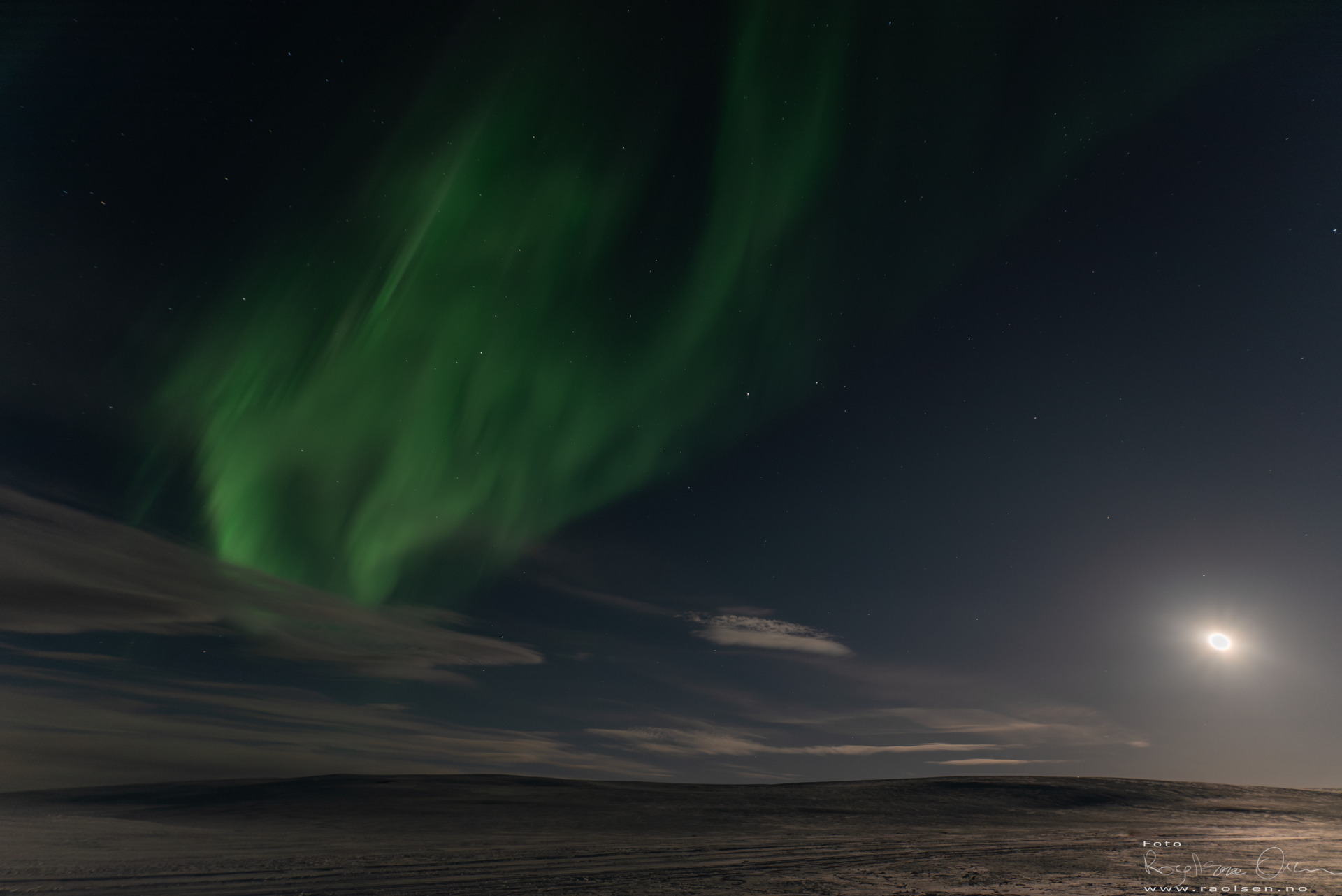
The northern light at Magerøya. The location is just a few kilometres from North Cape. This was one of my first aurora photos that I got in the autumn of 2024.

Click on the image for a bigger version.

What Are the Northern Lights?

The aurora borealis is a natural light display that occurs when charged particles from the sun interact with Earth’s magnetic field and atmosphere. These particles, carried by the solar wind, collide with gases like oxygen and nitrogen in the atmosphere. The energy released during these collisions emits light, creating the brilliant colors and shifting patterns we see.

In Norway, the northern lights are a source of fascination and pride. The most common colors are green and pink, but shades of red, yellow, blue, and violet can also appear. Green, the most prevalent color, is produced by oxygen molecules at altitudes of about 60 miles, while red hues occur at higher altitudes. Nitrogen contributes to blue and purplish colors, adding to the dynamic display.

Why Are Auroras Seen Near the Poles?

Earth’s magnetic field plays a crucial role in the formation of auroras. The field channels charged solar particles toward the magnetic poles, where they enter the atmosphere. Norway’s location within the Arctic Circle makes it one of the best places in the world to experience the northern lights. From the northern regions of Tromsø and Finnmark to the remote Lofoten Islands, Norwegians and visitors alike are treated to awe-inspiring displays during the dark winter months.

Me and my car out hunting for aurora.

Experiencing the Aurora in Norway

The best time to view the northern lights in Norway is from late September to early April, when the polar nights create long hours of darkness. Clear, cloudless conditions away from artificial lights provide the ideal setting. Tromsø, often called the “Gateway to the Arctic,” is one of the most popular destinations for aurora hunting. Other stunning locations include:

  • Alta: Known as the “City of the Northern Lights,” it is home to the world’s first northern lights observatory.
  • Senja: This island offers breathtaking landscapes and excellent chances to see the lights.
  • Svalbard: For a truly remote and magical experience, the Svalbard archipelago offers an unparalleled view of the aurora.
  • North Cape: Why not watch the northern light from the top of Europe? This is also where I shoot most of my photos of the northern light.

A photo from the 10th of September 2024. Early season can be nice, with much warmer weather than later in the season. Of course, the landscape will be darker and have fewer details since the snow is missing.

The Cultural Significance of the Aurora

In Norwegian folklore, the northern lights have been a source of wonder and mystery for centuries. Ancient Norse mythology often linked the lights to the gods, believing them to be reflections of their shields or the Valkyries riding across the sky. Sami traditions also hold rich interpretations, viewing the lights as sacred and a connection to the spiritual world.

Today, the aurora continues to inspire art, music, and storytelling in Norway. It is a symbol of the country’s natural beauty and a reminder of the powerful forces that shape our world.

How to Capture the Aurora Borealis

If you’re planning to photograph the aurora in Norway, preparation is key. Here are a few tips:

  1. Use a tripod: Stability is essential for long exposure shots.
  2. Adjust your camera settings: Use a wide aperture, high ISO, and a shutter speed of 5-30 seconds, depending on the aurora’s brightness.
  3. Dress warmly: Arctic temperatures can be extreme, so layering is crucial.
  4. Scout your location: Find a dark, open area with minimal light pollution.
  5. Be patient: Auroras can be unpredictable, so be prepared to wait.

Trollholmsund: A Blend of Myth and Geology in Norway

Nestled on the western shores of Porsangerfjord in Porsanger, Norway, Trollholmsund captivates visitors with its striking dolomite rock formations. These ancient structures, estimated to be 700 million years old, are not just geological wonders but also the subject of enchanting Sami folklore.

According to legend, these rocks were once trolls carrying a chest of gold and silver. While traversing the plateau, they were caught by the first rays of dawn near Trollholmsund, turning them into stone—a fate reserved for trolls exposed to sunlight. All these trolls add mysticism to an aurora photo session in the dark season of the year.

Conclusion

For Norwegians, the aurora borealis is more than a natural phenomenon; it is a cherished part of their heritage and a gateway to understanding the beauty of the Arctic. Whether you’re a local or a traveller experiencing the lights for the first time, the aurora’s celestial dance is sure to leave a lasting impression. Pack your bags, head north, and let Norway’s skies enchant you.

PS! Keep an eye on my blog, I’m planning a post about aurora at Trollholmsund.

Bird Safari of Summer 2024

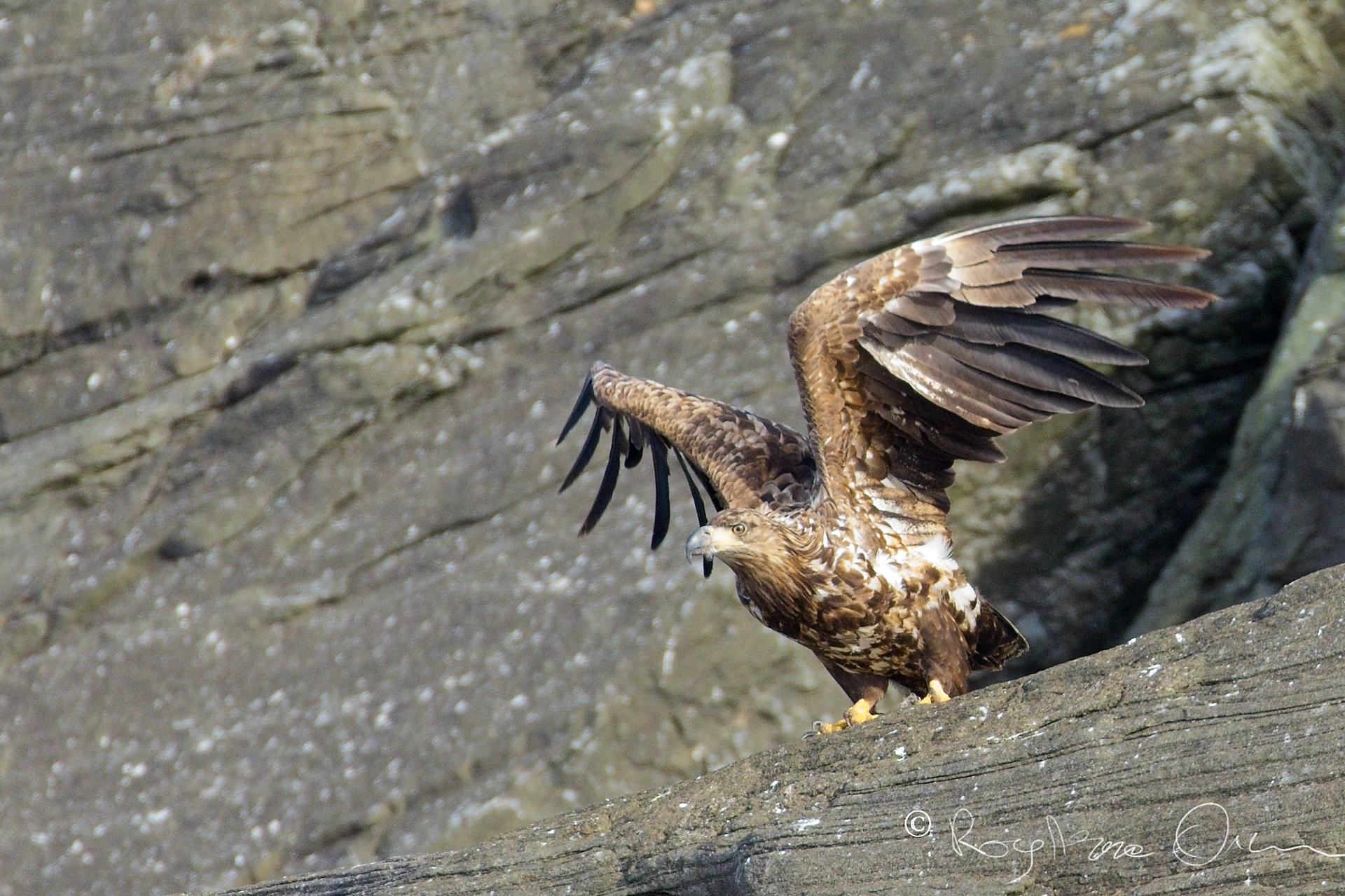
white tailed eagle takes off
Surrounded by birds on a Bird safari of summer 2024
Bird safari of summer 2024
A white tail eagle catched on a Bird safari of summer 2024
Bird safari of summer 2024

Christmas 2020

Julegudstjeneste

Live stream from Christmas 2020 in Honningsvåg church at 14.00 is streamed online by R.A. Olsen on behalf of Nordkapp Menighet. You can watch it here directly. It is also possible to watch the broadcast recorded later.

If you have problems with the stream above or want to watch the service as a recording, you can try this link.

Back to the main page.

When photography turns into history

wreck site

When photography turns into history

Sometimes when you are out shooting photos you might stumble over something that makes you like to know more about the motive you are shooting photos of. This summer (2020) I had one photo trip like that with a friend of mine. It all started with a plan to go fishing in one of our small lakes on the island of Magerøya.

Our trip was just going to be a fishing trip with some fishing rods, our dogs and of course one of my cameras. It was so easy and calm when my friend asked me if I have seen the wreck of the World War II aircraft situated close to our path. Of course, we had to go there to have a look at that and then all changed, and it was the start of this article.

Entering a wreck site

After a short ride with a car from my home in Honningsvåg (about 15 km), it was time to do the walk to the wreck site with my friend as a pathfinder and two dogs that love to do the trip. At first, we find a few small pieces of something I think is the fuselage, just small pieces of thin aluminium. My first thought was that there will not be much left of a crash site and I got a little disappointed.
After a while, we see fewer parts and I think that was all and there will be nothing to see or shoot photos of. Then everything changes when the main wreck site reveals itself for us.

photography turns into history

My first feeling when we arrived the site was excitement over the great view, then after a short time I got to feel the horror of the scene and I start to think about the crew of the aircraft. Did they survived or did they died at impact? Just being there rise so many questions that  I like to know more about. What happened, what kind of aircraft was it?  

My first research

Already when I was at the site I knew that I would need to know more about this aircraft and the history of it. Even if it was in the middle of the night when we got back from the fishing trip I could not help starting to do some research.
My first clue was the part I was sure had to be a part of the aircraft’s tail.

tail

A part of the tail laying upside down.

In my opinion, it had to be a tail looking something like this:

aircraft tail

Together with the engine and propellers, I ended up with the Petlyakov Pe-2 or Pe-3 used by the Soviet Union during World War II. For the curious one, I used this page on Wikipedia when identifying the aircraft.

Some confirmation of my research

The day after our trip my friend and I got together and talked about the aircraft and I told him that I like to know more about it. Luckily, he had someone to ask for advice to get some more information. His contact told us to go to the website World War II Aircraft wreck sites in Norway

Right there we got the confirmation about the aircraft and some more information. The aircraft was a Petlyakov Pe-3 from Sovjet just as my research had told me. If I had done my research the right way I should have been able to find it much faster if I just had done a search on Google for “flyvrak på Magerøya” (aircraft wreck on Magerøya). But how fun would that be? 🙂

This is similar to how the aircraft would have looked like before the crash.

Photo by aeroprints.com, CC BY-SA 3.0, https://commons.wikimedia.org/w/index.php?curid=32552142


Now, 77 years later there is not much left of the wreck, but still worth a visit if you have a interest in WW2

The story about the last flight for Petlyakov Pe-3

Pe-3 EngineThe aircraft was on an aerial reconnaissance for the battleship Tirpitz in Altafjord (Kåfjord). It was shot down in the vicinity of Sarnes at 15:56 on the 30th of Mars 1943 by Fw Heinz Käppler of 11./JG 5 in a Messerschmitt Bf 109 G.

The crew of the Petlyakov Pe-3 was:
SSgt. Aleksandr I. Katyshev (KIA).
Lt. Jurij V. Terentev (KIA).
They both jumped out in a parachute. One is said to have been picked up by a Norwegian fishing vessel, but was already dead at this time. According to Russian archives, none of the crew returned to the Soviet Union after the war.

The German pilot Heinz Käppler was KIA 2/11/1944 according to the book “Arctic Bf 109 and Bf 110 Aces” of the author John Weal.

This aircraft is one of several aircraft that were shot down over Magerøya. It looks as if four planes from the Soviet Union were shot down over Magerøya. The other three were of the type Ilyushin DB-3F / Il-4 and they were all shot down on the same day (see separate sections) by the same German pilot.

In addition, a German JU88 aircraft crashed in Nordvågen and a German aircraft of the type Blohm & Voss BV 138 crashed on the mainland but still in the municipality (Mannskarvika).

If anyone have some updates about one of this aircraft or one of the others here at Magerøya I would then love to learn more and maybe update this post with some more information. I can be reach on this email address or contact me at my photo page at Facebook

Source: https://tihlde.org/~ktsorens/flyvrak/

Ilyushin Il-4 at Sarnes

This is probably the aircraft wreckage most people know about and that most people have seen since it is located just off the road E69 at Sarnes.

Il-4 Sarnes

Aircraft: Ilyushin IL-4, SNo 7520

The Soviet crew consisted of the following persons from; 35 MTAP VVS SF (Mine-Torpedo Aviation Regiment):
• Dolinov, Alexei Andreevich SLt (POW)
• Jagodkin, Vasilji Ferdorovich SLt (POW)
• Marenukha, N.N. Sgt (KIA)
• Zhukov, Nikolaj, Ivanovich JSgt (KIA)

Marenukha and Zhukov died on the spot when they did not get out of the plane before it went down. Dolinov was captured on Kistrand 18.08.1942 by the army and handed over to the Luftwaffe. He later died in German captivity. Jagodkin parachuted and ended up in the sea at Sarnes and was captured and interrogated for the first time on Banak (Lakselv) on 21.07.1942. He later returned to the Soviet Union.
Ref: TsVMA / Rune Rautio

Krasj sted Sarnes

Like the plane at Sarnes, this was also shot down by LT Kurt Hammel. Kurt Hammel was at the time stationed on Banak 4./JG5 and the plane was of the type Messerschmitt 109 E1. According to my work, this plane still exists and I am reasonably sure that this is the one you can watch in the UK (SEE LINK).

The aircraft on Duksfjordfjellet was one of four Ilyushin IL-4 aircraft that had the task of bombing a convoy of German ships in Honningsvåg harbour. This was probably a sequel to the bombing on 14 / 7-1942 where Honningsvåg was badly damaged when a barge with ammunition exploded. As stated in the Sarnes section, three planes were shot down the same day. I have so far not been able to track down the third aircraft and it may have ended up in the sea. If anyone has heard of fishermen who have been given some parts that may have originated from a plane in their nets, it would have been nice to hear about it.

Ilyushin Il-4 at the mountain Duksfjordfjellet

I still lack identification for this wreck, it is between the two aircraft with serial no. 6704 or 7611.

Of the three wrecks I have visited, this is probably the one that looks most brutal, here it looks like there has been some serious high speed at the impact moment and the parts are scattered in a completely different way than the other two crash site I have been at.


This (picture above) appears to be the impact area itself and is a pit in the ground that appears to be from the violent forces of the crash moment. In this pit lies most of one engine while the other appears to be scattered over a large area.

Aircraft: Ilyushin IL-4
The entire crew of four died on the spot and was buried near the wreckage on Duksfjordfjellet by residents from Skarsvåg (unverified source). Can not say who the crew was until I get identification of at least one crew member or something that can help identify the aircraft’s serial number. So far I can only say that the Soviet crew was from the department; 35 MTAP VVS SF (Mine-Torpedo Aviation Regiment). If anyone has parts or personal belongings from the crew that have been picked up on the spot, I would like to see these in the hope that I may be able to find the identity of the plane and those who died on the spot.


Sylindere Il-4


The plane was shot down by LT Kurt Hammel in his Messerschmitt Bf 109. Hammel was at the time stationed on Banak 4./JG5 (See fact box). The aircraft was one of four (?) Ilyshin IL-4 aircraft that were tasked with bombing a convoy of German ships in the harbour of Honningsvåg. Of these aircraft, Hammel is said to have shot down three where the location of two of these is known. The third I have not been able to track down and may have ended up in the sea. The other aircraft that is located is at Sarnes (see separate section). In addition, one aircraft is said to have been damaged but still managed to return to base.

Two German aircraft

From the crash site of the Blohm & Voss BV 138 in Manskarvika, Nordkapp

In addition to the Soviet planes, two German planes have gone down here in the municipality, one in Nordvågen and one on the mainland (Mannskarvika).

The plane in Mannskarvika is a Blohm und Voss BV138 C-1 WNr.311036  is said to have crashed into the rock wall due to an accident on 8 / 12-1943. The entire crew of four died at the site.

3./I.(F)SAGr.130 (Seeaufklärungsgruppe 130) was stationed at the seaplane port in Billefjord at that time. The unit was stationed there between August 1943 and November 1944 and had just under 10 aircraft at most. In addition, there were several other departments stationed at the seaplane port in Billefjord.

Crew:
Oberleutnant Hermann Hahn
Fw.Wilhelm Botzenhart
Hauptmann Gerhard Grosse
Uffz.Hans Schellehaas

Blohm & Voss BV 138 was a German three-engine long-range patrol and bomber.

I have very little information about the aircraft in Nordvågen, but according to Rangvald Larsen, the wreck of the plane must have been dumped in the sea by German soldiers after the accident so there is no wreckage to visit. Not easy to tell if the plane was a JU88 or a ME 109 since I get different planes from two different sources.

If it is a Junker JU 88 then it may be this that I have found some information about.

Ju 88A-5 WNr 2424 belonging to 1./KG 30, This plane went down on 6 August 1941. Probably injured in air battle during an attack on Vaenga airport near Murmansk in the afternoon. Landed on land “By North Cape”. The entire crew was killed in the crash and was buried at Banak.


Crew:
Oblt Friedrich Meinhof (born 8/3/1913)
Fw Hermann Lutz
Uffz Karl Köhn
Uffz Arthur Groth

It is a Junker JU88 like this one that is supposed to have crashed near Nordvågen, Nordkapp

The bombing of Honningsvåg harbour

Honningsvåg 1942. From the book "De Utrolig Bildene" – William Hakvaag

All of the Soviet Ilyushin Il-4 was on a mission to bomb a German convoy of 28 vessels that were in the harbour of Honningsvåg. They managed to sink two ships, MK Aud and MK Store Bill. Four Norwegian sailors are said to have died on MK Store Bill.

It is part of the story that 20 tons of potatoes were lost during the attack. Perhaps “lost” is wrong since it must have rained potatoes all over Honningsvåg and it is said that many of the civilians gathered potatoes. They should have tasted reasonably good if you cooked them a couple of times.

Photo from: www.krigsbilder.net

Five days before, the port of Honningsvåg was also bombed, which resulted in a barge / boat with ammunition and dynamite exploding. This is what it looked like in Honningsvåg after the powerful explosion ..

Credits and thanks

First I need to thank my friend Lars Eirik Isaksen for bringing me to the wreck site and for the support when research for the information used here.

I also need to tell how grateful I am for the website “Flyvrak” and for the nice job Kjell Sørensen do there.

Lofoten Krigsminnemuseum by William Hakvaag photos from the book “De Utrolig Bildene – William Hakvaag”.

Peter Neuwerth – www.jagdgeschwader5und7.de for photos regarding Kurt Hammel

Rangvald Larsen for information about the German aircraft’s

As always Wikipedia is a great source for information when you do stuff like this post. If you like my fact boxes on the right side of this post you should consider to do a donation to Wikipedia. You can do that on this link to their website.

The gallery of photos from the site

Magerøya

Public Domain,
https://commons.wikimedia.org/w/index.php?curid=660397

Magerøya (Northern Sami: Máhkarávju) is a large island in Troms og Finnmark county, in the extreme northern part of Norway. The island lies along the Barents Sea in Nordkapp Municipality, just north of the Porsanger Peninsula. The mouth of Porsangerfjorden lies off the east coast of the island.

Magerøya has an area of 436.6 square kilometres (168.6 sq mi) and the highest elevation on the island is the 417-metre (1,368 ft) mountain Gråkallfjellet. The most northern point on the island is also the northernmost point in Norway outside Svalbard: Knivskjellodden. The island features a bleak, barren, tundra-covered landscape devoid of any trees (except for a few small pockets of mountain birch), with steep cliffs along the coast, and dramatic mountainscapes in the interior. On southern Magerøya, archaeologists have found evidence of settlements dating back 10,000 years.

Source: Wikipedia

Petlyakov Pe-3

Photo: U.S. Air Force photo
http://www.nationalmuseum.af.mil
gallery
VIRIN: 080116-F-1234S-013,
Public Domain
https://commons.wikimedia.org/w/index.php?curid=6284442

The Petlyakov Pe-3 was the long-range heavy fighter version of the successful Petlyakov Pe-2 high-speed dive bomber used by the Soviet Union during World War II.

Its design and use followed a comparable path to those taken by the German Luftwaffe with the Junkers Ju 88 and the British Royal Air Force with the De Havilland Mosquito. The Soviets realized the need for a night fighter after the first night bombing of Moscow during Operation Barbarossa. The Petlyakov Pe-2 was selected for modification as the most suitable aircraft available.

Source: Wikipedia

The Klimov M-105 engine

The M-105, designed in 1940, drew heavily on Klimov’s experience with the Hispano-Suiza 12Y (license-built as the M-100). In addition to a two-speed supercharger, the M-105 had several improvements like two intake valves per cylinder and a counterbalanced crankshaft. The M-105 was the first Klimov V-12 engine design to use reverse-flow cylinder heads, forcing the induction system to be placed on the outside of the cylinder banks, with the exhaust system also exiting from the outboard side, with twin sets of “siamesed” exhaust ports adjacent to each other. About 129,000 M-105 and its variants were built.

Source:Wikipedia

Tirpitz

Tirpitz was the second of two Bismarck-class battleships built for Nazi Germany’s Kriegsmarine (navy) prior to and during the Second World War.

The commander of the Kriegsmarine, proposed in November 1941 that Tirpitz be deployed to Norway. The ship would be able to attack convoys bound for the Soviet Union, and to tie down British naval assets and deter an Allied invasion of Norway. 

The British were determined to neutralise Tirpitz and remove the threat she posed to the Allied arctic convoys. Ten vessels were assigned to the operation. Only eight of them reached Kåfjord (Altafjord) in Norway for the attack, which began early on 22 September.

Three of the vessels successfully breached Tirpitz‘s defences, two managed to lay their mines. The mines caused extensive damage to the ship; A fuel oil tank was ruptured, shell plating was torn, a large indentation was formed in the bottom of the ship, and bulkheads in the double bottom buckled. Repairs lasted until 2 April 1944 in Altafjord.

Operation Catechism, the final British attack on Tirpitz, took place on 12 November 1944. In the aftermath of the attack, 82 men trapped in the upturned hull were rescued by cutting through the exposed bottom. Figures for the death toll vary from approximately 950 to 1,204.

Source: Wikipedia

Ilyushin Il-4

By Mike1979 Russia - Own work, CC BY-SA 4.0, https://commons.wikimedia.org/w/index.php?curid=3869978

In 1938, the Ilyushin design bureau redesigned the Ilyushin DB-3 to ease production and improve its performance, the revised version receiving the designation DB-3F. The aircraft’s internal structure, particularly the wings, was extensively changed, eliminating the need for hand finishing of the structure, and with duralumin replacing the large scale use of steel in the earlier version. The fuselage nose was lengthened to give more room for the navigator/bombardier while reducing drag.

The prototype DB-3F, powered by the same 949 hp (708 kW) Tumansky M-87B engines of the DB-3M, was piloted on its maiden flight by Vladimir Kokkinaki on 21 May 1939. It successfully passed through state acceptance tests and entered production in January 1940, with the 1,100 hp (820 kW) Tumansky M-88 quickly replacing the M-87.

The DB-3F was redesignated Il-4 in March 1942. Some series had wooden outer wings and front fuselages to conserve metals, and throughout the production, engines and fuel tanks were upgraded for improved performance while retaining the same range.

However the most notable change was the addition of larger defensive guns in the turret, using the 12.7 mm UBT machine gun in place of the earlier 7.62 mm weapons. In addition, it was found that the gunners were attacked first, so blocks of armor were placed around the gunner positions.

This extra weight was not offset by the newer engines however, and the Il-4 proved to be slower than the earlier versions at only 404 km/h (251 mph). An attempt to improve performance was made as the Il-6, adding large diesel engines and heavier armament. The engines proved unreliable and production was never started. The Il-4 remained in production until 1945, when just over 5,200 had been built.

General characteristics
Crew: four (pilot, bombardier/navigator, dorsal gunner/wireless-operator, ventral gunner)
Length: 14.76 m (48 ft 5 in)
Wingspan: 21.44 m (70 ft 4 in)
Wing area: 66.70 m2 (718.0 sq ft)
Empty weight: 5,800 kg (12,787 lb)
Max takeoff weight: 12,120 kg (26,720 lb)
Powerplant: 2 × Tumansky M-88B 14-cyl. air-cooled radial piston engines, 820 kW (1,100 hp) each

Performance
Maximum speed:
410 km/h (250 mph, 220 kn) at 6,500 m (21,325 ft)
Range: 3,800 km (2,400 mi, 2,100 nmi) (max internal fuel), 2,600 km (1,404 nmi; 1,616 mi) with 1,000 kg (2,200 lb) bombs
Service ceiling: 8,700 m (28,500 ft)
Time to altitude: 13.6 min to 5,000 m (16,404 ft)

Source: Wikipedia

Oblt. Kurt Hammel 4./JG 5

Kurt Hammel
Photo from: www.jagdgeschwader5und7.de

Kurt Hammel was stationed at Banak (Lakselv) at J.G. 5 4. Staffel from 21.06.1941 and until 30.07.1943. It means he left Banak eleven days after he shot down the three Ilyushin Il-4 at Magerøya. Hammel was flying the Messerschmitt Bf 109.

claimed kills
Hammel's handwritten list over plane he had shot down.

Kurt Hammel’s handwritten list over aircraft’s he has shot down. Listing at line 8, 9, and 10 is the aircraft that was shot down here at the island. Notice that he got the date wrong for some reason.

Photo source: Peter Neuwerth – www.jagdgeschwader5und7.de

Ltn Heinz Käppler 2/J.G. 5

Lt. Heinz Käppler Staffelkapitän of the 15./J.G. 5 (from 8/28/1944 to 3/24/1945 see report) with comrades in front of his Me 109 G-6

Ltn. Heinz Käppler was the one that shot down the Petlyakov Pe-3 at Magerøya.

Ltn. Heinz Keppler St. Kap. of 15/JG 5 who was killed when his aircraft overturned on take off from Lister Airfield and burst into flames on 24th. March 1945. The aircraft was a Bf 109 G-14 w.n. 46415

An former Pilot who saw the accident live. He was telling it like this:
It was a typically take-off accident of a Me109. The plane pulling to the side (I dont know if left or right) an then overturn. Ltn. Käppler firstly was completely unwoundet. But he lays upside down, so the helper can’t free him quickly. And then, this was the tragedy, the cockpit was flooded from the tank with fuel. The helper needed more than two hours to get him free from the cockpit, and meanwhile he was drowned by his own fuel.

One year – August gallery

Male

August is here together with more birds from more bird safari. The male reindeer is starting to get some nice antlers again.

You can see and read the rest of my overview of the year 2019 on this page.

Please visit my facebook page here to stay updated on my latest photos. Remember to like my Facebook page. 🙂

One year – July gallery

Late

The One year of photos is here with it’s July gallery. July is perfect for more bird safaris and to catch the last part of the midnight sun that disappears at the end of July. 5th of July was also the day when MS Roald Amundsen got here on its maiden voyage.

You can see and read the rest of my overview of the year 2019 on this page.

Please visit my facebook page here to stay updated on my latest photos. Remember to like my Facebook page. 🙂

One year – June gallery

The globe

June, the month of the midnight sun. The midnight sun creates some stunning moments and gives the guest up here some memorable moments. For me, one of the most boring time of the year to shoot landscape photos since the light doesn’t change so much.

You can see and read the rest of my overview of the year 2019 on this page.

Please visit my facebook page here to stay updated on my latest photos. Remember to like my Facebook page. 🙂

One year – May gallery

Me and Dixie

The magic month of May, reindeer, Sami, midnight sun, cute babies and my birthday. It should also be the month of spring but after a warm April, we got more winter and snow in May.

You can see and read the rest of my overview of the year 2019 on this page.

Please visit my facebook page here to stay updated on my latest photos. Remember to like my Facebook page. 🙂

One year – April gallery

Puffins

In my one year in photos, we have now reached the April gallery. We really had an early start of the bird safari season this year and most of this gallery is about that.

You can see and read the rest of my overview of the year 2019 on this page.

Please visit my facebook page here to stay updated on my latest photos. Remember to like my Facebook page. 🙂