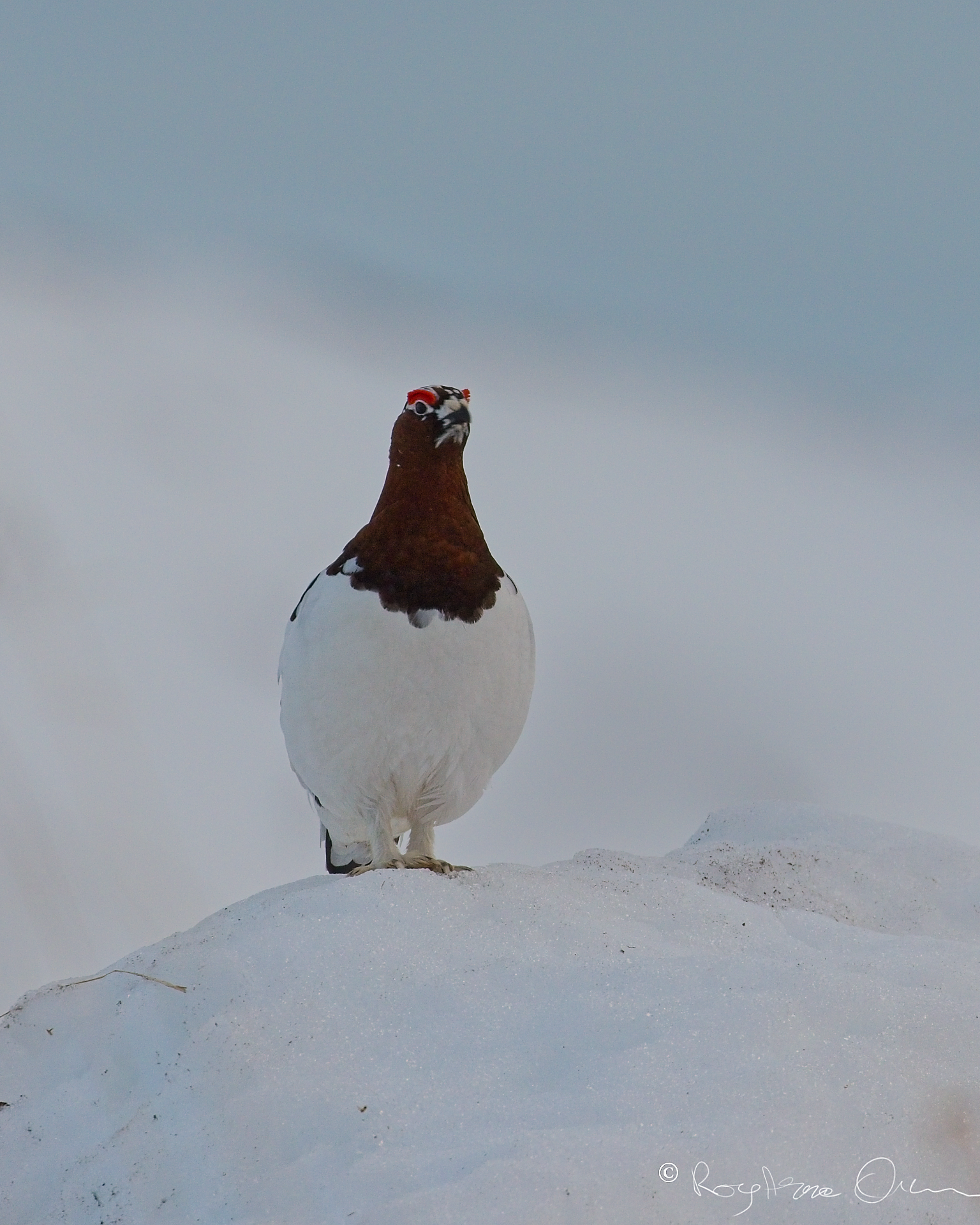
The first time I saw a rock ptarmigan up here on Magerøya, I stood still. Not because it was beautiful – but because it was there. Not because it needed permission to be – but because it simply was. And that was enough.
The rock ptarmigan (Lagopus muta) is a bird of the grouse family – but it is not like the others. It does not seek to be seen – it seeks to be lived. It lives in high mountains, on steep slopes, in snow, in wind, in silence. And it is not afraid – because it knows it belongs.
On Magerøya, the ptarmigan is not just a bird – it is a symbol. For the place. For the roe. For nature that does not need to explain itself – it is simply there.
And even though the sea eagle is the king of Magerøya – the ptarmigan is the king of the mountain. Not because it rules – but because it is. Without noise. Without demand. Without expectation.
On May 10, 2025, when I stood there with the camera in my hand, I knew it was not me who took the picture – it was the ptarmigan who gave me permission to see it.
🐦 Fact Box
Rock Ptarmigan – Lagopus muta
Family: Grouse (Phasianidae)
Size: 36–40 cm
Weight: 500–800 g
Color: Summer – brown with dark spots. Winter – white (in snow).
Distribution: Northern parts of Europe, Asia, and North America
Status in Norway: Not endangered – but very sensitive to disturbance
🌿 The Reward of Stillness
Now, when I look at the images and watch the video, I don’t just think of the ptarmigan – I think of the place. Of the calm. Of how sometimes, you don’t need to go far to find beauty – it is enough to stand still, and let nature come to you.
I did not hear the ptarmigan – it was too far away. But I saw it. And that was enough.
It was not far away – only 30 meters from my friend’s house. And that is what makes it so beautiful: nature does not need to be far away. It is here – if you just stand still.
Few natural phenomena inspire as much awe and wonder as the aurora borealis, or northern lights. These vibrant, dancing ribbons of light transform the night sky into a canvas of color, captivating those lucky enough to witness them. In Norway, the northern lights are more than a natural spectacle—they are an integral part of the country’s culture, history, and identity. Let’s explore the science and the magic behind the aurora borealis from a Norwegian perspective.
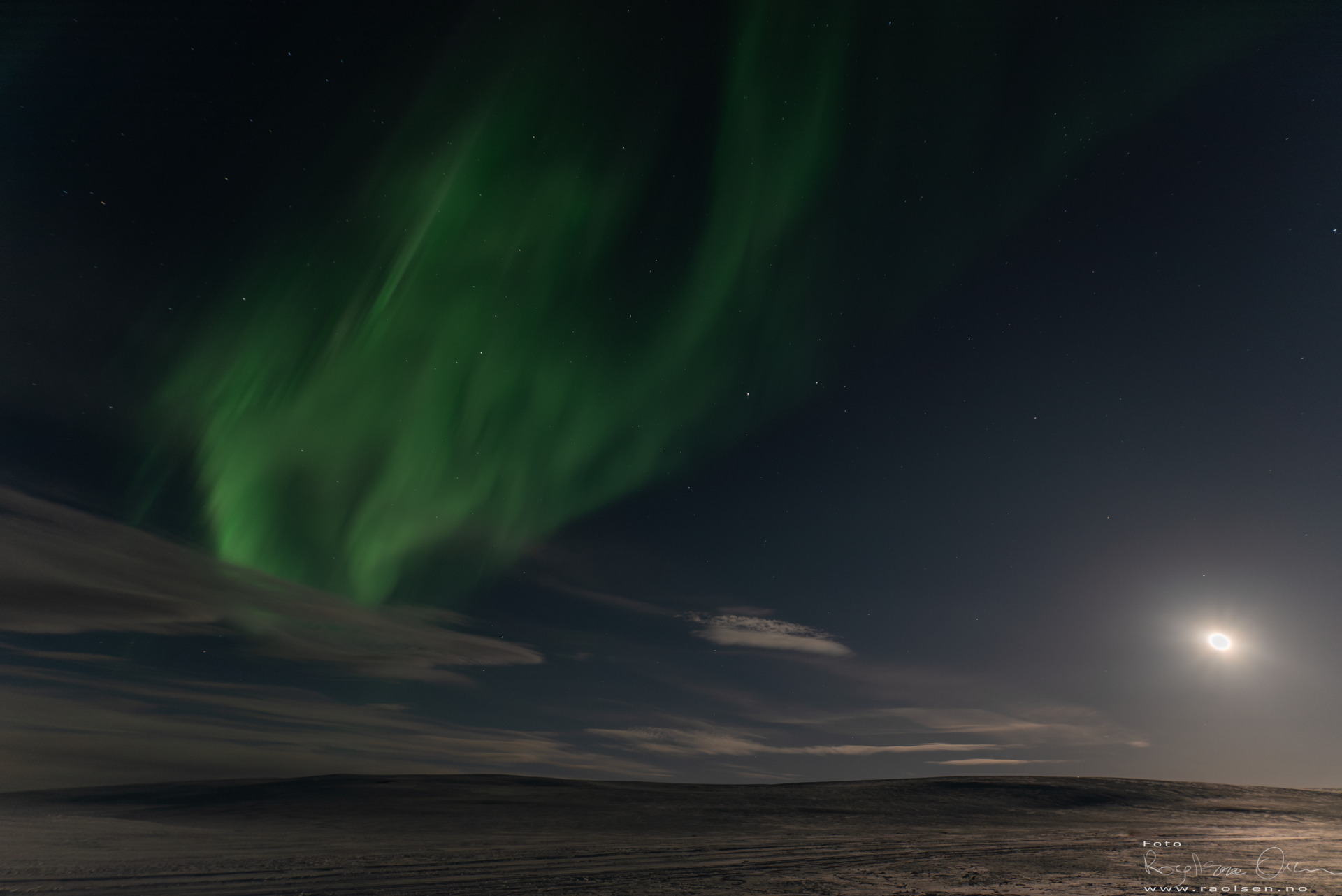
The northern light at Magerøya. The location is just a few kilometres from North Cape. This was one of my first aurora photos that I got in the autumn of 2024.
Click on the image for a bigger version.
What Are the Northern Lights?
The aurora borealis is a natural light display that occurs when charged particles from the sun interact with Earth’s magnetic field and atmosphere. These particles, carried by the solar wind, collide with gases like oxygen and nitrogen in the atmosphere. The energy released during these collisions emits light, creating the brilliant colors and shifting patterns we see.
In Norway, the northern lights are a source of fascination and pride. The most common colors are green and pink, but shades of red, yellow, blue, and violet can also appear. Green, the most prevalent color, is produced by oxygen molecules at altitudes of about 60 miles, while red hues occur at higher altitudes. Nitrogen contributes to blue and purplish colors, adding to the dynamic display.
Why Are Auroras Seen Near the Poles?
Earth’s magnetic field plays a crucial role in the formation of auroras. The field channels charged solar particles toward the magnetic poles, where they enter the atmosphere. Norway’s location within the Arctic Circle makes it one of the best places in the world to experience the northern lights. From the northern regions of Tromsø and Finnmark to the remote Lofoten Islands, Norwegians and visitors alike are treated to awe-inspiring displays during the dark winter months.
Me and my car out hunting for aurora.
Experiencing the Aurora in Norway
The best time to view the northern lights in Norway is from late September to early April, when the polar nights create long hours of darkness. Clear, cloudless conditions away from artificial lights provide the ideal setting. Tromsø, often called the “Gateway to the Arctic,” is one of the most popular destinations for aurora hunting. Other stunning locations include:
Alta: Known as the “City of the Northern Lights,” it is home to the world’s first northern lights observatory.
Senja: This island offers breathtaking landscapes and excellent chances to see the lights.
Svalbard: For a truly remote and magical experience, the Svalbard archipelago offers an unparalleled view of the aurora.
North Cape: Why not watch the northern light from the top of Europe? This is also where I shoot most of my photos of the northern light.
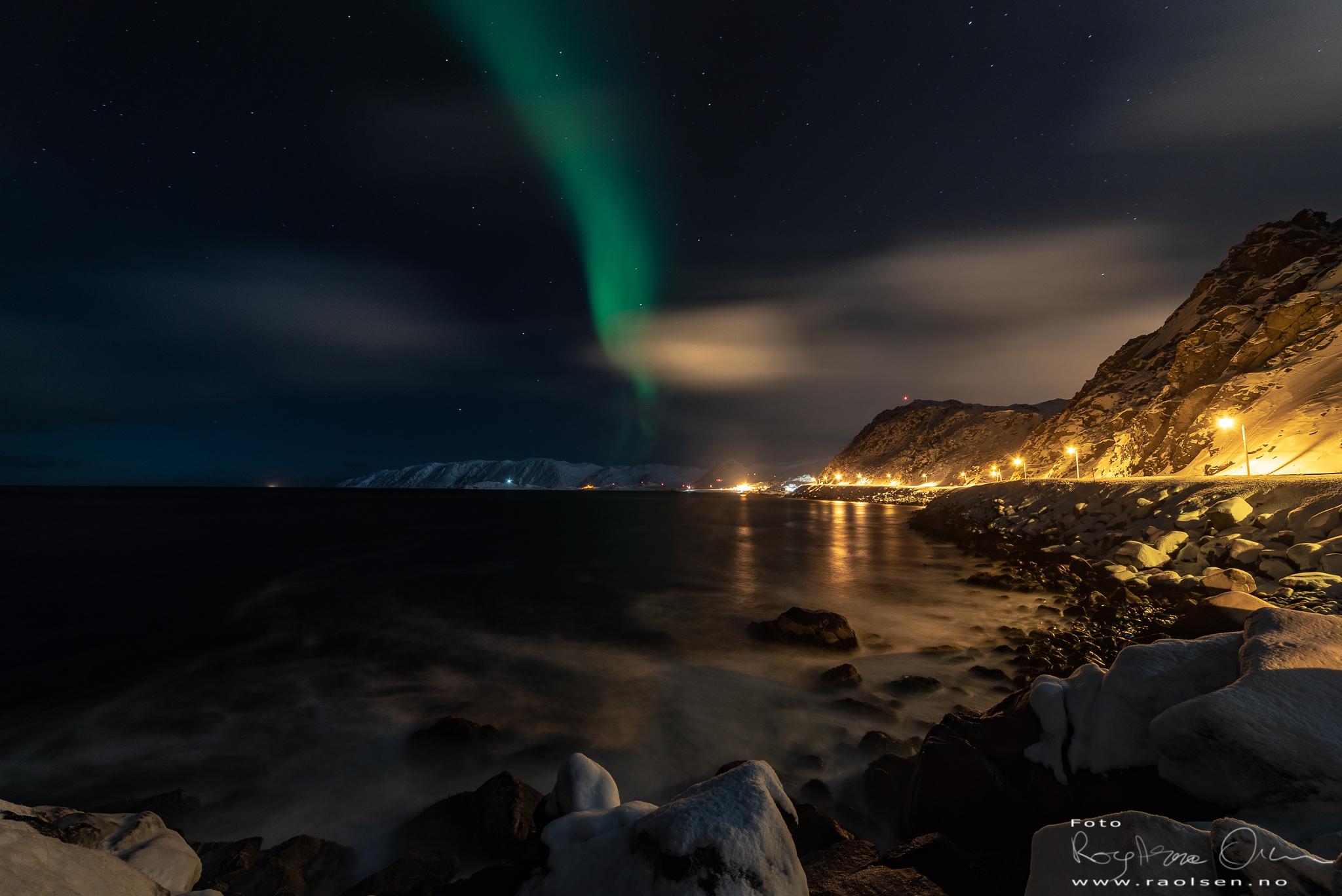
A photo from the 10th of September 2024. Early season can be nice, with much warmer weather than later in the season. Of course, the landscape will be darker and have fewer details since the snow is missing.
The Cultural Significance of the Aurora
In Norwegian folklore, the northern lights have been a source of wonder and mystery for centuries. Ancient Norse mythology often linked the lights to the gods, believing them to be reflections of their shields or the Valkyries riding across the sky. Sami traditions also hold rich interpretations, viewing the lights as sacred and a connection to the spiritual world.
Today, the aurora continues to inspire art, music, and storytelling in Norway. It is a symbol of the country’s natural beauty and a reminder of the powerful forces that shape our world.
How to Capture the Aurora Borealis
If you’re planning to photograph the aurora in Norway, preparation is key. Here are a few tips:
Use a tripod: Stability is essential for long exposure shots.
Adjust your camera settings: Use a wide aperture, high ISO, and a shutter speed of 5-30 seconds, depending on the aurora’s brightness.
Dress warmly: Arctic temperatures can be extreme, so layering is crucial.
Scout your location: Find a dark, open area with minimal light pollution.
Be patient: Auroras can be unpredictable, so be prepared to wait.
Trollholmsund: A Blend of Myth and Geology in Norway
Nestled on the western shores of Porsangerfjord in Porsanger, Norway, Trollholmsund captivates visitors with its striking dolomite rock formations. These ancient structures, estimated to be 700 million years old, are not just geological wonders but also the subject of enchanting Sami folklore.
According to legend, these rocks were once trolls carrying a chest of gold and silver. While traversing the plateau, they were caught by the first rays of dawn near Trollholmsund, turning them into stone—a fate reserved for trolls exposed to sunlight. All these trolls add mysticism to an aurora photo session in the dark season of the year.
Conclusion
For Norwegians, the aurora borealis is more than a natural phenomenon; it is a cherished part of their heritage and a gateway to understanding the beauty of the Arctic. Whether you’re a local or a traveller experiencing the lights for the first time, the aurora’s celestial dance is sure to leave a lasting impression. Pack your bags, head north, and let Norway’s skies enchant you.
PS! Keep an eye on my blog, I’m planning a post about aurora at Trollholmsund.
The One year of photos is here with it’s July gallery. July is perfect for more bird safaris and to catch the last part of the midnight sun that disappears at the end of July. 5th of July was also the day when MS Roald Amundsen got here on its maiden voyage.
You can see and read the rest of my overview of the year 2019 on this page.
Please visit my facebook page here to stay updated on my latest photos. Remember to like my Facebook page. 🙂
Hurtigruten MS Roald Amundsen at dock in Honningsvåg.
MS Roald Amundsen is arriving and some comorants is checking out this new ship
The new Hurtigruten ship MS Roald Amundsen is on it's first voyage and is arriving Honningsvåg.
A puffin take off!
I guess the puffin is my favourite bird when doing bird safari at Gjesværstappan.
The Black guillemot got it's catch.
Two white tale eagles is fighting in the air.
You will be able to see a lot of comorants and shags if you visit the bird safari at Gjesværstappan.
A female reindeer with it's calf.
Can't get much cuter than this......
This calf is most likely born in the end of May and will here be just a little over one months old. They are growing so fast.
The view from North Cape in the late evening at the 19th of July.
Seagull are probably one of the first birds you will see when heading out for a bird safari.
June, the month of the midnight sun. The midnight sun creates some stunning moments and gives the guest up here some memorable moments. For me, one of the most boring time of the year to shoot landscape photos since the light doesn’t change so much.
You can see and read the rest of my overview of the year 2019 on this page.
Please visit my facebook page here to stay updated on my latest photos. Remember to like my Facebook page. 🙂
Plants are growing in the midnight sun.
Red-breasted merganser swimming in a lake of gold.
Tufjorden under some strange clouds that I don't know the name of.
Enjoying the midnight sun at North Cape
The globe at North Cape is popular so it can get crowded when the weather is like this.
The magic month of May, reindeer, Sami, midnight sun, cute babies and my birthday. It should also be the month of spring but after a warm April, we got more winter and snow in May.
You can see and read the rest of my overview of the year 2019 on this page.
Please visit my facebook page here to stay updated on my latest photos. Remember to like my Facebook page. 🙂
After a mild April where most of the snow melted we thought the spring was here. But the winter strikes back in May and this gannet got to feel it while preparing it's nest.
A bird safari on the first of May. We thought the spring was here but May got cold with a lot of snow.
It's hard to get great photos of birds when we get hit by snow like this.
Bad weather in May was perfect to try something new inside. My first attempt to do baby photography.
Since I thought my baby photography went well I need to share one more sample of it.
The sami people is back at Magerøya with their reindeer. Actually they arrive in April but I got my first picture in May.
May is here and the reindeer is waiting their calf in May and June. Sadly I didn't get any photos of the new born calf this year.
May is also the time when we get our last sunset for the summer. This is me and my Dixie out enjoying one of the last sunset.
One of the last sunrise before we get the midnight sun.
Small rivers grows bigger when the snow is melting up in the hills.
Some small river even grows into small waterfalls.
The midnight sun is here and we now got sun all day if the weather is clear.